MEDICAL RECORD SUMMARIZATION · APPLIED AI
From Medical Record Summarization to Enterprise AI Strategy: Why Architecture, Not the Model, Decides the Outcome
Author: Mitch Quinn, Director of AI/ML
A healthcare organization was close to signing an expensive annual contract with a healthcare AI vendor. The use case was clear, and the business value was real. Their case managers were spending hours each week reading through medical records, some as long as 300 pages, then writing summaries that flowed downstream to multiple internal and external stakeholders. Volume was high, with thousands of documents per month, and growing. AI was the obvious answer.
They paused instead. A decision that large deserved a second opinion, so they brought in X by 2 before signing.
What followed is a useful story for any CIO, CTO, or Head of AI weighing how to approach a serious AI investment. It is also a clear illustration of why architecture, not the model, is where most AI programs are won or lost.
The Pause That Paid for Itself
The reason was not that the vendor was bad, but that the decision in front of the client was bigger than a single tool selection. The commercial model priced a capability that was tied to a specific generation of technology, with limited room to upgrade as the LLM landscape evolved. Both the extraction logic and the integration model sat outside the client’s control, a common constraint in externally hosted tooling and a difficult one where patient data cannot leave the enterprise.
In other words, the contract on the table would have committed hundreds of thousands of dollars a year to a point-in-time view of AI that was already moving. As X by 2’s team noted during the strategy work, between the start of the analysis and the end of it, two newer LLM versions had already shipped, each cheaper and better than the one the vendor was selling against.
The contract on the table would have committed hundreds of thousands of dollars a year to a point-in-time view of AI that was already moving.
A competing consultancy was also in the mix, offering a subscription-priced build at a materially lower per-document cost than the vendor. However, that option delivered a fixed and comparatively narrow set of extracted fields, with extension dependent on the provider rather than the client. Neither option addressed the deeper question sitting underneath the procurement decision.
A Pattern X by 2 Has Seen Before
Across healthcare payers, providers, and insurers, X by 2 sees the same sequence play out: teams discover what general-purpose AI assistants can do, prove the concept informally, and then leadership faces the real question of how to standardize, secure, and scale that capability without exposing the enterprise to risk. This organization was no exception. Interest in AI was already running ahead of the tooling and governance available to support it.
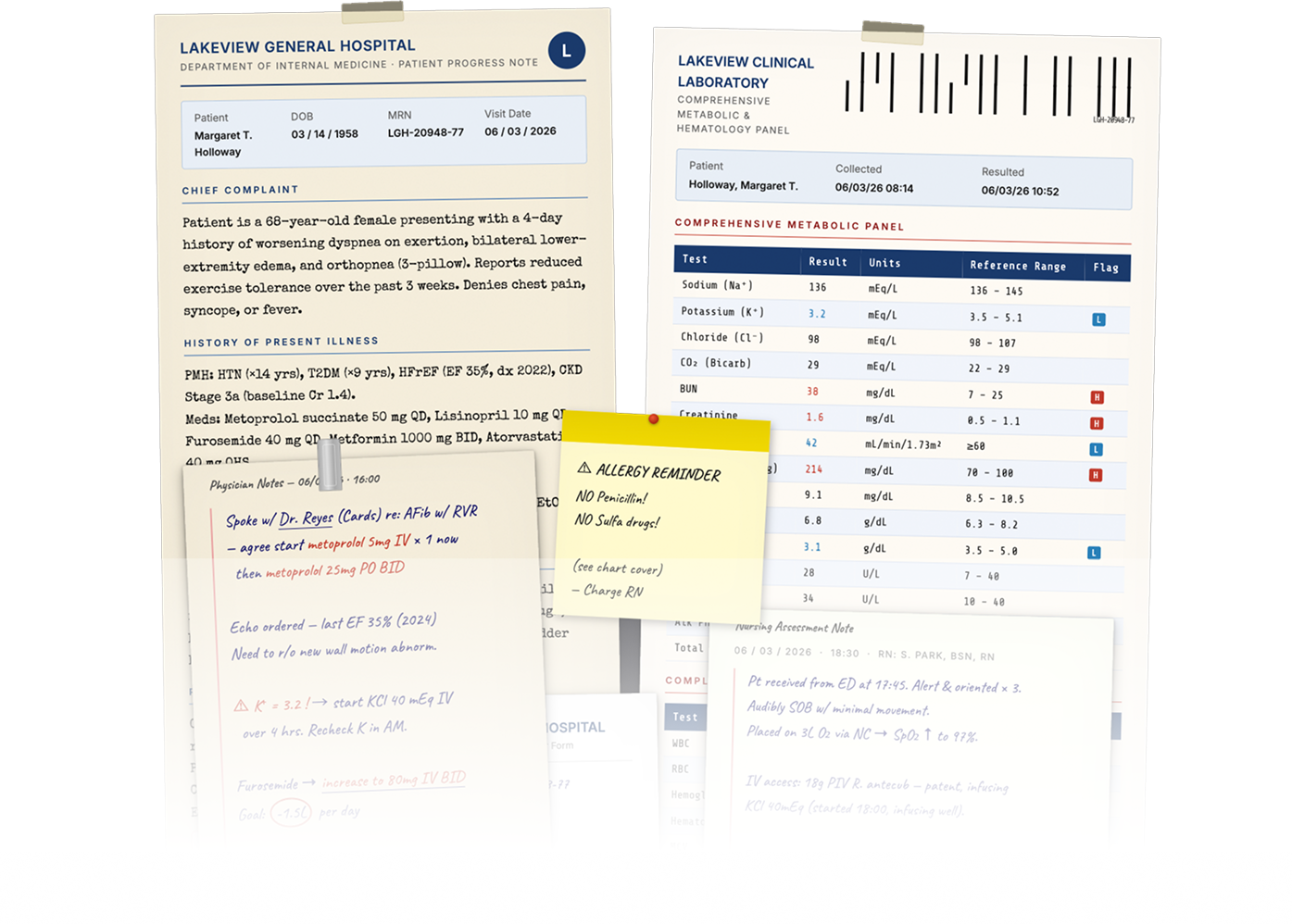
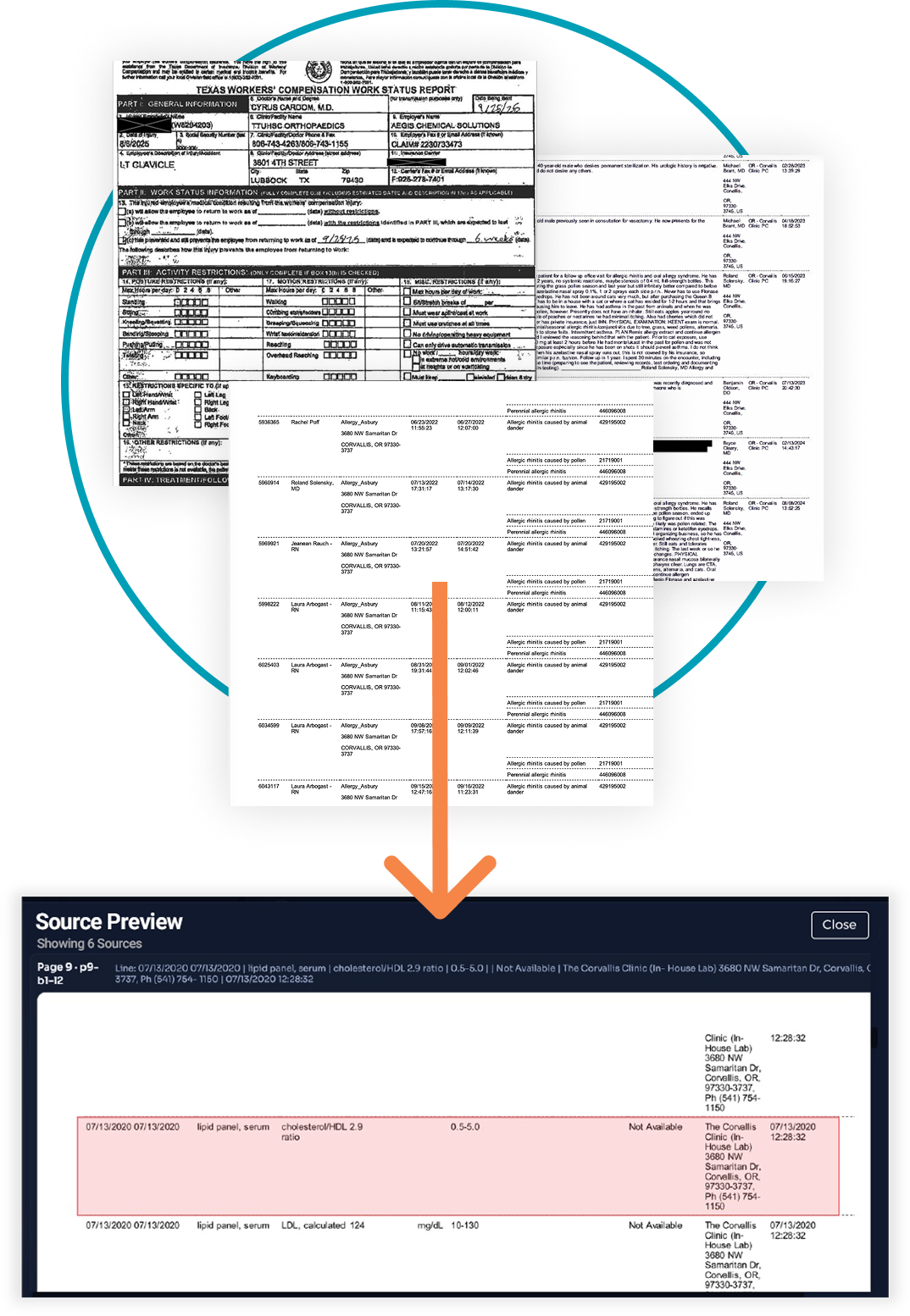
That gap, between ad hoc value and production-grade capability, is where most AI programs stall. It is also where deep industry context matters. Patient data has constraints that generic AI architects often miss. Medical records are messy, with handwritten notes, check boxes, scans, and faxes smashed into PDFs with no standard format. Clinical nuance, such as how a vital trend or lab range is interpreted, can be invisible to a tool built for marketing automation. X by 2’s team has spent years inside healthcare and insurance environments, and that domain fluency shaped every recommendation that followed.
That gap, between ad hoc value and production-grade capability, is where most AI programs stall.
Architecture First, Then the Use Case
Rather than treating medical record summarization as one project, X by 2 framed it as the first proof point for a broader architectural pattern the client could reuse. The organization already had a backlog of AI initiatives waiting in the wings. A one-off vendor decision would not scale to that list.
The strategy team delivered four interlocking pieces of work over six weeks:
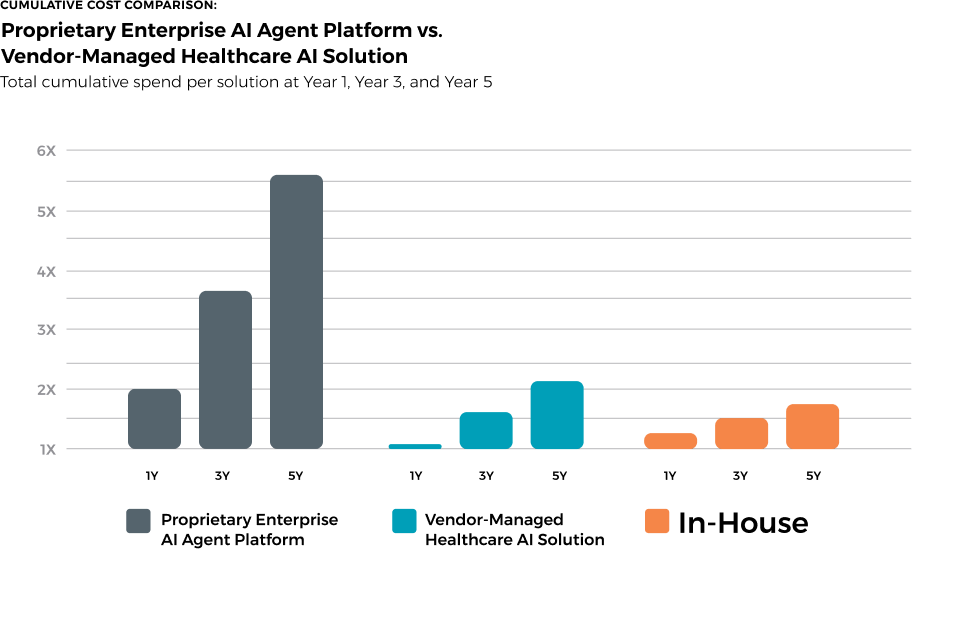
Medical Records Summarization Recommendation Matrix
Cost Per Doc
Proprietary Enterprise
AI Agent Platform
Recommendation: Platform is not fit
- Technology lock-in. Cannot upgrade to latest LLM and OCR models. To save on price.
- Paying a lot to not be able to leverage important model features RAG
- OCR Requires customization by their consultants. Adding a new field would be a request.
- Risk of hallucinations
Implementation cost: 1.0x
Ongoing cost: 10.0x per year
Estimated cost per doc: 95¢ per document
Vendor-Managed Healthcare AI Solution
Recommendation: Struggled with ongoing cost and will cause vendor lock-in
- Struggled with AI costs and adoption
- Vendor makes all changes
- Risk of hallucinations
Implementation cost: 0.0x
Ongoing cost: 3.6x per year
Estimated cost per doc: 3¢ per document
In-House
Recommendation: Approach proven successful at other clients
- Additional infrastructure for team to manage
Implementation cost: 1.9x
Ongoing cost: 1.8x per year
Estimated cost per doc: 1¢ per document
- A recommendation matrix comparing the vendor option, the competing consultancy, an in-house build, and the status quo, with cost analysis, risk profiles, and long-term maintainability scored against each.
- An AI platform and tech stack guide that gave the client a clear decision framework for when a general-purpose AI assistant is sufficient, when to use generative AI, and when to use analytical AI.
- An AI Project Playbook spanning prototype, build and evaluate, pilot UAT, and rollout phases, complete with a structured approach to LLM-as-a-Judge evaluation so the organization could measure hallucination rates and accuracy rather than guess at them.
- A conceptual architecture spanning current state, MVP state, and future state, including cloud and integration design that fit existing systems and security posture.
The architectural recommendation was deliberate. Use flagship models from OpenAI, Google, and Anthropic, accessed through the client’s existing cloud AI platform, so the client could swap to better and cheaper models as they emerge. Pair that with an enterprise OCR service that could clear security review without a lengthy approval cycle and keep patient data inside the network. Wrap the whole thing in an agentic workflow layer so prompts, templates, and outputs could be tuned by the client’s own people, not a vendor’s change request queue.
Use flagship models… so the client could swap to better and cheaper models as they emerge.
The Numbers That Followed
The economics shifted dramatically. The X by 2 architecture cut the per-document cost by more than 95 percent against the vendor path, and by roughly two-thirds against the competing consultancy. Annualized, projected production running costs represented a small fraction of the vendor contract, with pilot-phase cloud spend lower still.
Estimated Cost Per Doc
Proprietary Enterprise
AI Agent Platform
95¢
PER DOCUMENT
Vendor-Managed Healthcare AI Solution
3¢
PER DOCUMENT
In-House
1¢
PER DOCUMENT
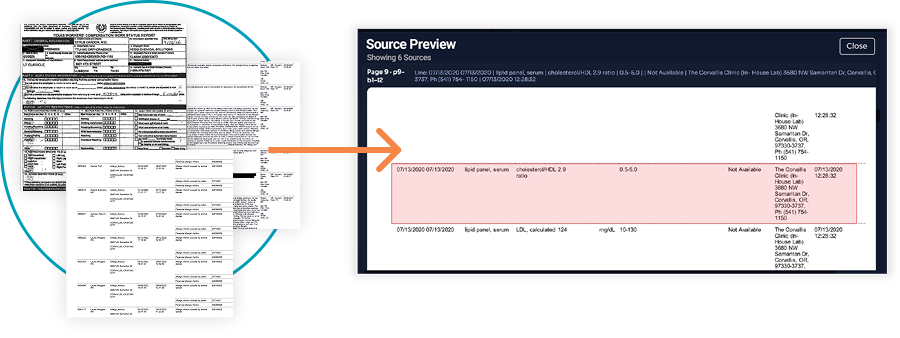
Just as importantly, the solution the client now owns extracts dozens of times more structured fields from a medical record than either competing option offered. It validates every line of every summary against the source document, flagging output that is not grounded so that case managers can review before acting. It captures user feedback to drive ongoing prompt and template improvements through the AI Evals process, which addresses a core question for any healthcare AI program: how to ensure summaries are accurate and grounded in the source record before case managers rely on them.
The X by 2 architecture cut the per-document cost by more than 95 percent against the vendor path.
Why This Matters Beyond One Project
The client did not just get a medical records summarization tool. They got an AI platform pattern, a project playbook, and an evaluation methodology they can apply to the rest of their AI roadmap. Several follow-on use cases are already in flight, leveraging the same architectural foundation while addressing new business needs.
For technology leaders evaluating AI investments right now, the lesson is not “build versus buy.” It is that the highest-leverage decision in any AI program is the one made before model selection, before vendor selection, and before the pilot. It is the architectural decision about how AI will live inside your enterprise, how it will integrate with the systems and data you already have, and how flexible it will remain as the underlying technology continues to change at a pace no procurement cycle can match.
That is the work X by 2 was built to do. Architecture first. Industry deep. AI ready.
The highest-leverage decision in any AI program is the one made before model selection, before vendor selection, and before the pilot.
Meet the Expert
Mitch Quinn is the Director of AI/ML at X by 2. With over 25 years of experience applying state-of-the-art research, Mitch is leveraging deep learning methods to solve the complex, critical problems facing healthcare. He has created and developed award-winning AI solutions to revolutionize engagement, equity and impact in care management and holds several patents in the fields of anomaly detection and classification.
Let’s get to work.
Every successful partnership starts with an introduction. Send us a message or schedule time to chat.
Learn More